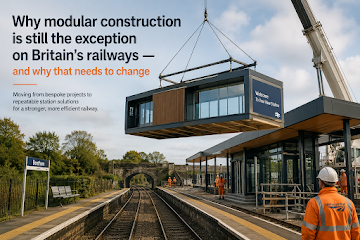
Why Modular Construction is Still the Exception on Britain’s Railways
Signal
Modular construction is widely adopted in healthcare and hospitality but remains rare in British rail infrastructure.
Impact
negativeRailway contractors and infrastructure managers face delays and increased costs due to traditional construction methods, while passengers experience prolonged project timelines and service disruptions.
Modular construction has transformed various sectors in the UK, including healthcare and hospitality, where it has become a standard practice. For instance, hotel rooms are now often manufactured off-site and installed quickly, minimizing disruption. However, this innovative approach has not permeated the railway sector, where traditional construction methods still dominate.
The UK rail industry has faced significant challenges, including delays and budget overruns, which have been exacerbated by the lack of modular construction techniques. According to Network Rail, the cost of major projects has risen by 20% over the past five years, largely due to inefficiencies in traditional building practices. This trend has led to increased scrutiny from government bodies and stakeholders who are pushing for more efficient methods.
Stakeholders such as railway contractors and infrastructure managers are particularly affected by the slow adoption of modular construction. The reliance on conventional methods not only prolongs project timelines but also escalates costs, impacting the overall budget of rail projects. For example, the delayed completion of the Crossrail project in London, which has seen costs balloon to over £18 billion, illustrates the pitfalls of traditional construction.
Passengers also bear the brunt of these inefficiencies. Extended project timelines mean longer wait times for improved services and infrastructure upgrades. The UK government has recognized the need for modernization in the rail sector, with Transport Secretary Mark Harper advocating for innovative solutions to enhance efficiency.
To address these challenges, the rail industry must embrace modular construction. This shift could lead to faster project delivery, reduced costs, and improved service for passengers. As other sectors have demonstrated, modular construction can significantly enhance operational efficiency and project outcomes.